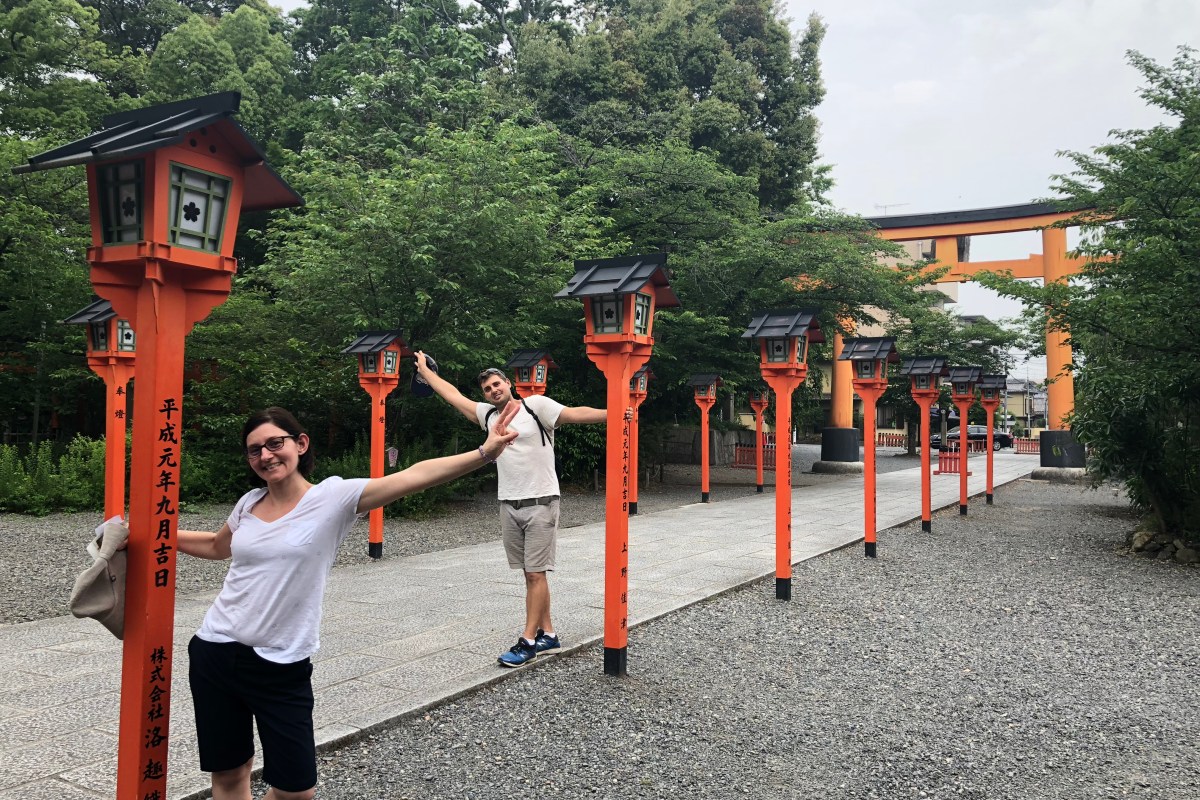
Halfway through our Asian adventure and ready for a ‘break’, we booked 6 nights in Kyoto (for those who know my husband this is a real treat!). Depending on what you read, Kyoto is said to have up to 2000 temples and shrines and is often referred to as the capital of culture of Japan, and was also its capital city for over 1000 years up to the mid 1800’s. Arriving in Kyoto was a marked change of pace from the smaller villages and cities of the last 10 days, and an obvious return to global civilisation when the main train station is home to Dolce & Gabbana, Prada and friends, and the underground food hall of every foodlover’s dreams!


To get a sense of the city and do some penance for the food consumption to date, we jumped on a half day cycling tour to cover some ground and learn some of the history. There truly is a shrine at every turn in this city – some towering, sprawling and impressive in their design, others simple and tucked in between residential homes. It’s an easy city to cycle, mainly flat, and with a population of just under 1.5 million, felt very safe to be on the roads amongst the traffic. We’d definitely recommend this as a way to see some of the city and get some insider tips from a local too.


Kyoto packs a lot in for travellers; you could fill every day from start to finish if you wanted to with temples, shrines, galleries and museums (we chose just a handful and took the occasional afternoon nap option!), and then there are the day trips also. In just under an hour we got to the city of Osaka for some exploring and street food, namely the famous takoyaki (minced octopus balls). We didn’t feel like we had missed too much choosing not to spend any nights in Osaka, although I suspect the night life could be fun! Our main reason for heading to Osaka though was to expand our travelling crew with the addition of my best friend Diane, joining us for a 10 day Japanese adventure.


Now a trio, we hit up the big-ticket tourist sites in Kyoto with Di – along with every other tourist. The crowd flowing out of the tiny Inari train station toward the Fushimi Inari Taisha shrine, one of Japan’s most recognisable landmarks, made us second guess our visit but once you are inside most places, the crowds dissipate and it is always possible to find a little place for reflection and to avoid a knock on the head from a selfie stick. What makes this shrine so special is the estimated 10,000 torii gates in the brilliant vermillion colour representative of Shinto winding up the hill and across the site, creating the ultimate instagram destination for kimono wearing selfie enthusiasts.


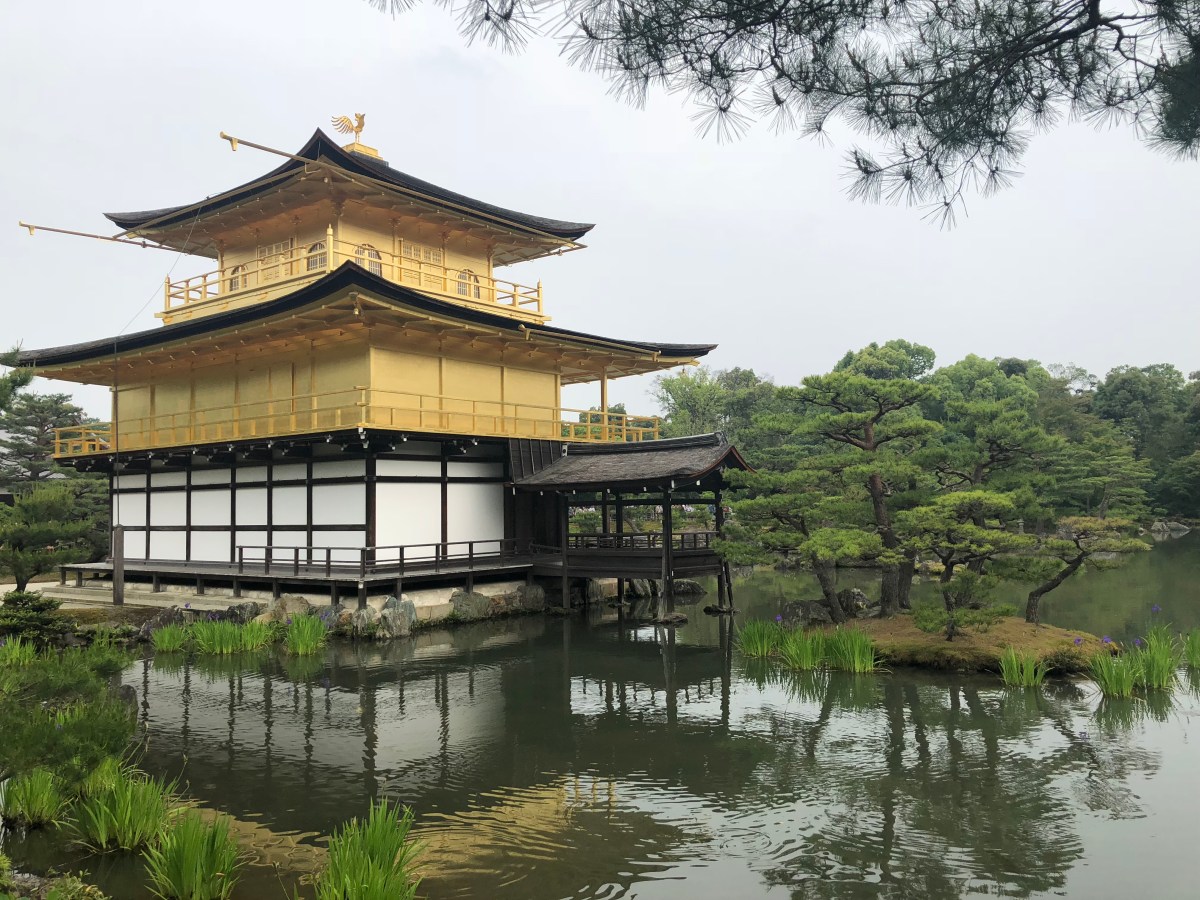
Our self-guided Kyoto tour also included the Arashiyama bamboo forest, a photographers dream just a short train trip west of the city, and the Kinkaku-ji temple where the top two floors of the pavillion are covered in gold leaf. It’s a zen buddhist temple complete with a landscaped ‘strolling garden’, and despite being in an awkward location it pulls a phenomenal crowd. While the ‘drawcard’ sites were lovely and worth the visit, often the lesser known shrines that we stumbled across on our wanderings were equally as impressive (side note: it is possible to see too many shrines!).
Sanjusangendo temple was an absolute highlight, featuring 1001 statues of Kannon, the goddess of mercy, lined up in a wooden hall 120 metres long, said to be the longest wooden structure in Japan. For some reason it was virtually empty at the time we visited, and rarely appears in articles as a suggested site, but was an absolute knockout in terms of temples we had seen so far in this country. Credit to Di for getting this one on the itinerary!


Of course this being Kyoto, we spent time in the Gion district where we participated in a tea ceremony and learned about the historical and theatrical art of serving matcha tea; we shopped, we ate, we drank; we (the girls at least) marvelled at the beautiful kimonos worn by so many locals and tourists as they strolled around the historical cobbled streets. Whilst not an overly beautiful city at first glance, there is plenty to be found beneath the surface once you get lost in this place, and I suspect a return visit would unearth hidden gems away from the regular tourist trail.
 no fixed address...