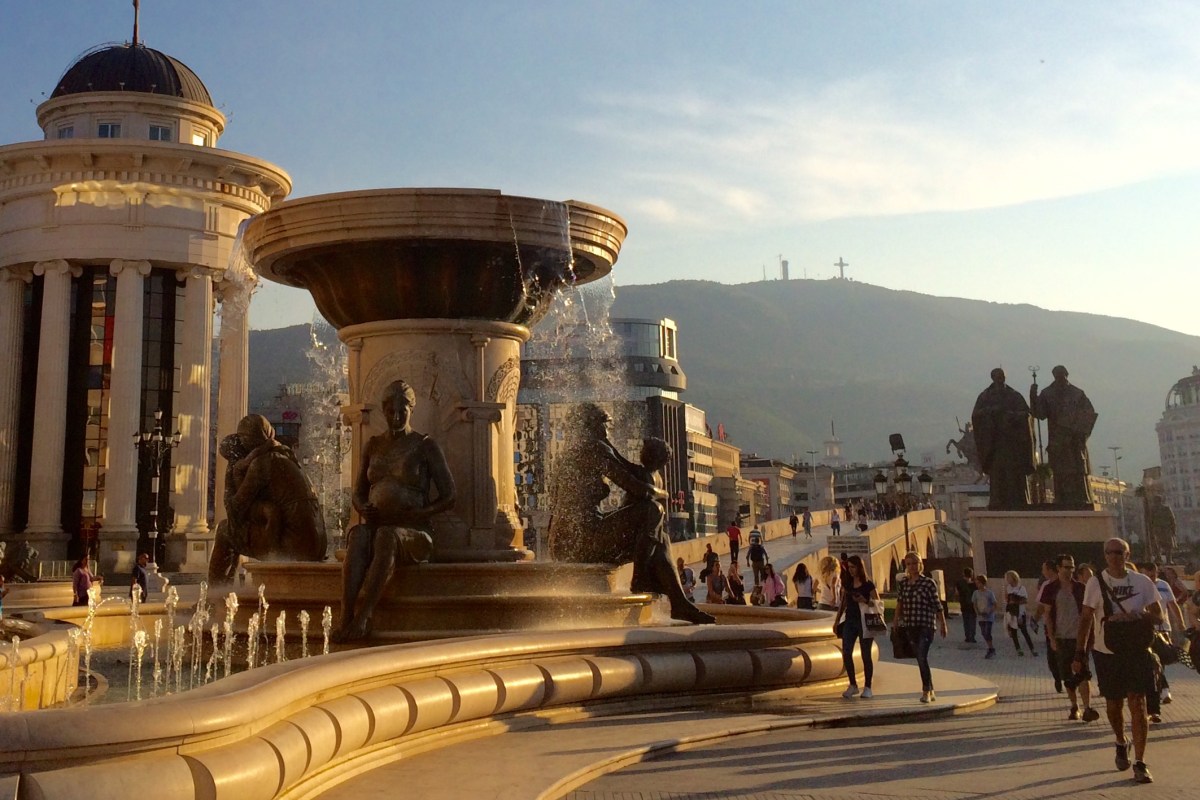
Macedonia. Where to begin? For a small country it has a larger-than-life feel about it and we’re still not quite sure how to describe it. It is modern and archaic; it is eastern europe with a western flavour; and the food was the best we would eat in this region. Our arrival at Skopje’s main bus station which has no English information anywhere was an indicator that Macedonia is still relatively undiscovered by westerners, but there is always a young local who can help out with translating.
Landlocked by five countries it lacks the coastal resort vibe of Croatia and Montenegro, and appears to have made up for an inferiority complex by building a capital city like nothing we have ever seen. Skopje is one of the most random places we have ever been (and you know we have been to a lot of random places!).
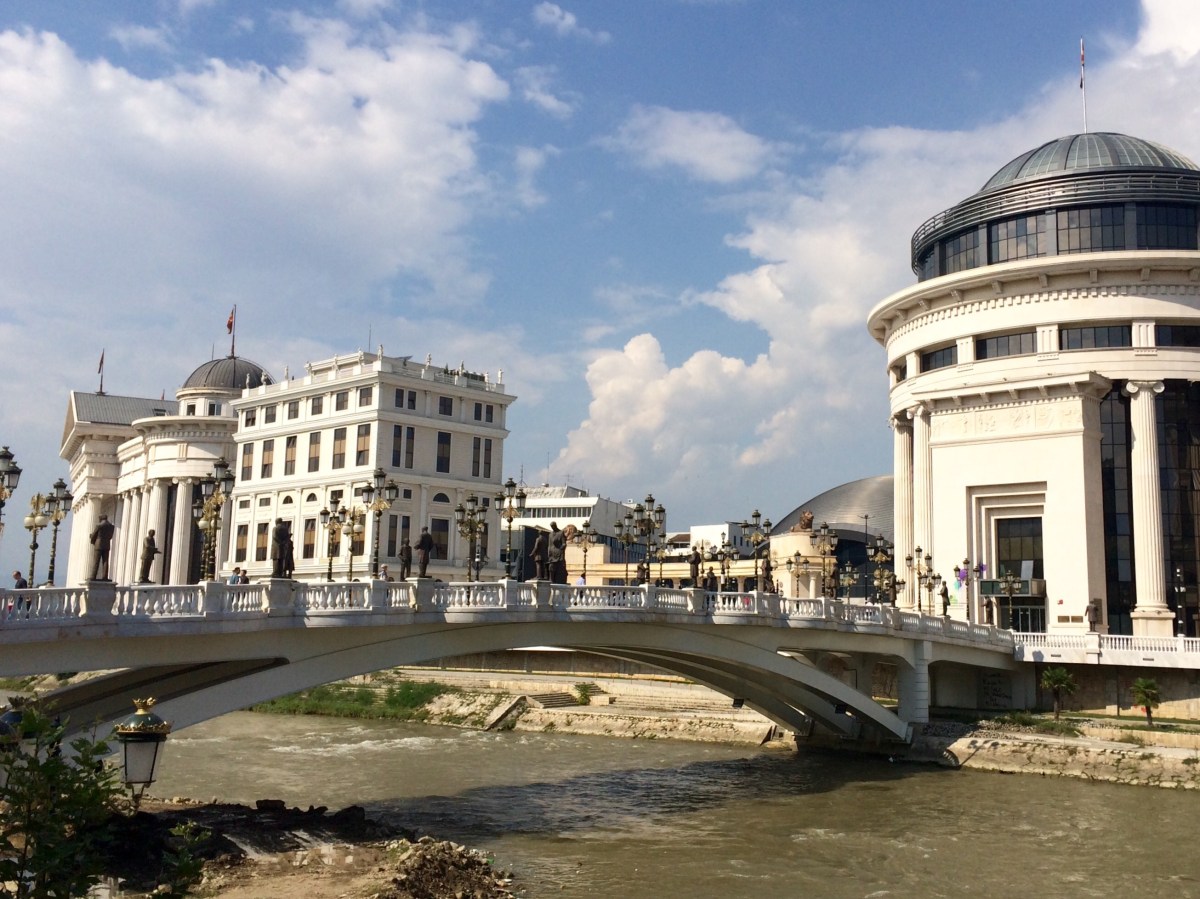
Wandering the main square at night we were stunned by the brightly lit buildings, by the enormous fountain complete with a rearing horse that stands 22m tall and is surrounded by concrete lions, and the classical music being pumped out of speakers. The government has embarked on a project in the last 5 years to create a “classical appeal” for Skopje but critics are not so sure they have pulled it off and the frequent graffiti on the new buildings and statues tells us the locals are not so sure about it either.


Skopje feels like a fantasyland – like someone decided to go for a sculpture garden feel then super sized everything. This is a country that loves statues: they are everywhere and they are disproportionately enormous, and the buildings too are all large and many are relatively new following an earthquake that flattened the city in the 1960’s. With architectural inspiration possibly taken from Caesars Palace on the Vegas strip the city lacked a certain authenticity compared to neighbouring cities, but it is also quirky and lively and there is no shortage of locals and tourists out until all hours filling the restaurants and bars across the city.


There is still an old town in Skopje that has retained its charm and houses a Turkish bazaar said to be the second largest in Europe after Istanbul’s Grand Bazaar. With the old town on one side of the river and the ‘new town’ on the other, it really is a city that has two faces.
After a couple of days here we hit the bus trail again and arrived at Lake Ohrid which sits on the border of Macedonia and Albania. Bus trips over here are a real adventure; the driver smoked for most of the three hour trip, and as if the roads are not narrow and dangerous enough with crazy drivers, he also took a few phone calls on his mobile. It really is a matter of closing your eyes and praying you make it to the other end!
Lake Ohrid is a tranquil and well-equipped holiday resort area. The “beaches” may be the lake rather than the ocean but the water is warm, the deck chairs are plentiful and the shore is lined with beach clubs, restaurants and bars. Being mid September was an ideal time to be here away from the high season and there was still enough action and people around for the holiday vibe to continue.


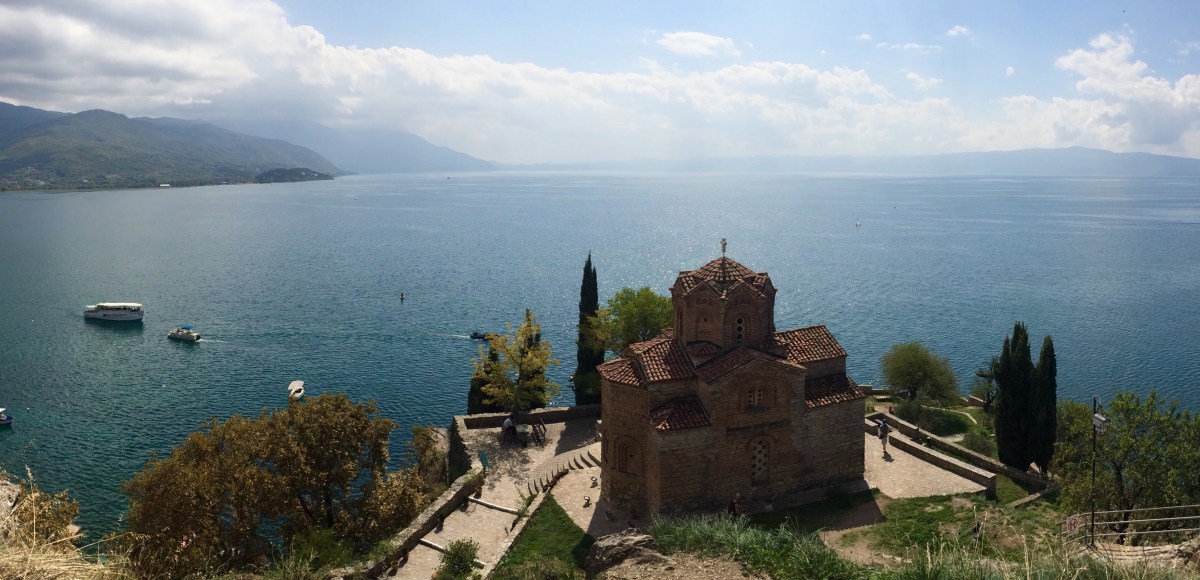
Ohrid has been referred to as the “Jerusalem of the Balkans” (mind you so has Sarajevo and Thessaloniki. Churches rule in Eastern Europe!). At one time in its history there were 365 churches in Ohrid – literally one for every day of the year. The most famous of these is St Jovan (John) of Kaneo, perched on a small headland and offering arguably the best view of the lake. It is allegedly the most photographed site in Macedonia, and well worth the walk along the lakedge to view it, although a boat is an option also.
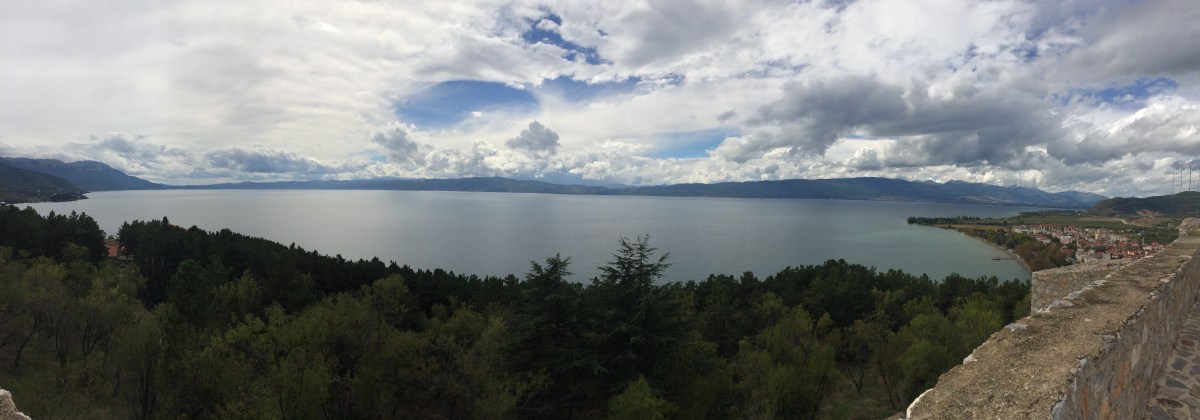
Equally awesome views of the lake were found when standing on the walls of Samuel’s Fortress, built just over 1000 years ago, and while making our way to St Clements church and the remnants of the cathedral nearby we walked past an old theatre nestled within a residential area. It’s amazing how the city has been built in and around the remnants of previous centuries, carefully curating the past while creating a modern future.
Macedonia was a great stop along the Balkans trail and provided some of the food highlights we will remember from this region. As a country it will always compete with the stunning coastline and islands of its neighbours, but there are more than enough reasons to head inland and check it out for a few days.
 no fixed address...